Car detailing · Miramar, San Diego
Bring a flashlight.
Paint correction, ceramic coatings, full details and interiors for your car. We measure every panel, correct it under raking light, and hand you the readings. Then we hand you the light.
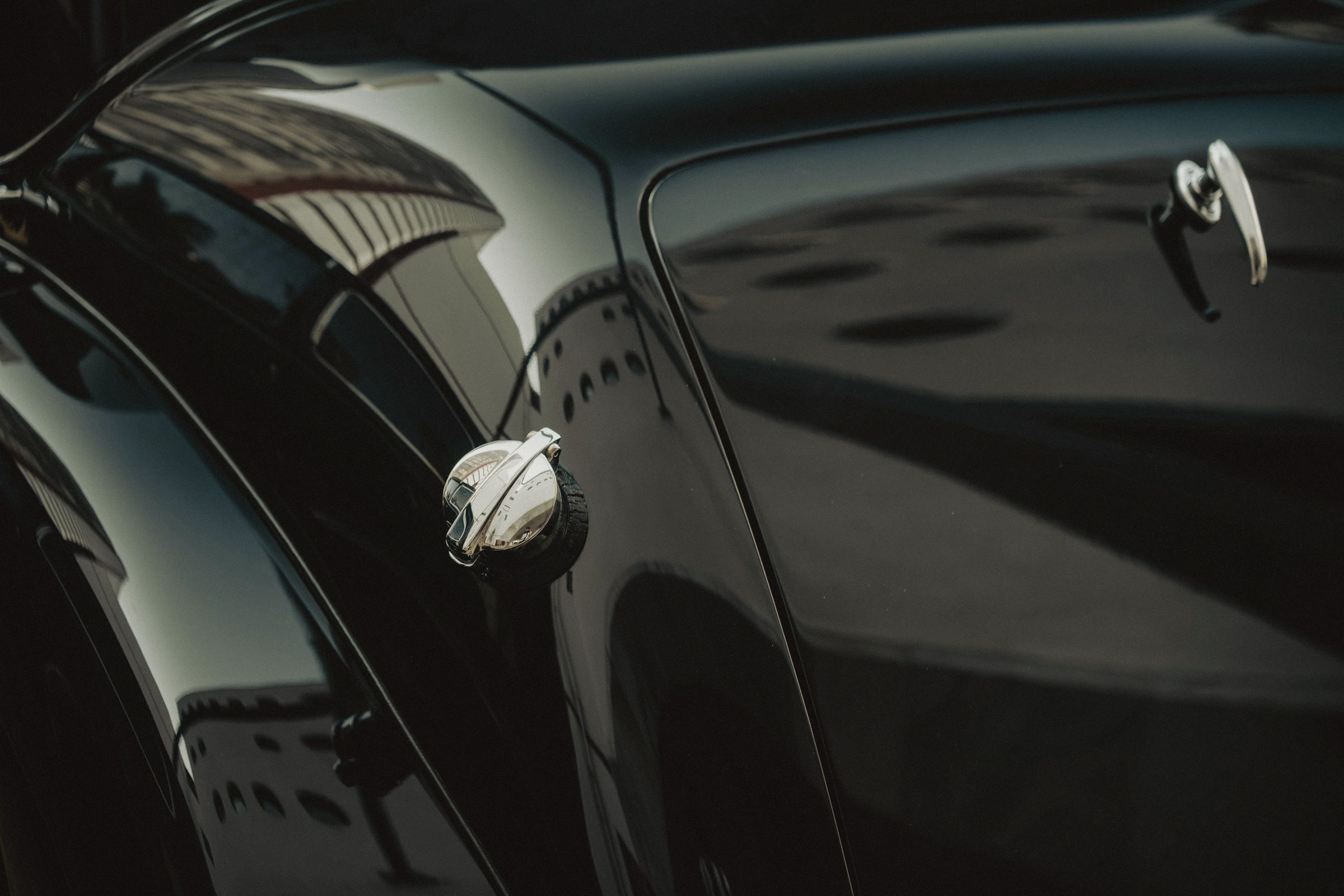
The rear wing and door of a black classic car, split by a strip of masking tape. Left of the tape the paint is as it came in; right of it, corrected. A torch moves over the paint and shows the swirl marks on the left. A small taped square on the left is a test spot that has already been polished.
rak·ing light noun
Light held low, almost flat to a surface, so every scratch, ripple and speck of dust throws a shadow. Museum conservators use it to examine paintings before they touch them.
We use it on every panel of your car: before we start, between every step, and once more with you at pick-up.
Move your pointer across the lettering above.
-
Measure before we cut.
Polishing removes clear coat, and clear coat doesn’t grow back. Every panel gets a paint-depth reading first, so we know how much there is to work with and how much to leave.
-
Least aggressive method first.
It’s the trade’s oldest rule, and the one most shops skip. We start with a test spot, the softest pad and the finest polish that might work, and step up only if the test spot says so.
-
We’ll tell you what won’t come out.
If your fingernail catches in a scratch, it’s through the clear. Chasing it would cost more paint than it’s worth. You’ll hear that from us at drop-off, not at pick-up.
Every panel, measured.
Factory paint is about 100–180 microns thick in total. The clear coat on top, the only layer we polish, is around 40–50. We take a reading on every panel when your car arrives and again before it leaves, and you get both.
Condition report · example
Hood
- Paint depth
- 124 µm
- Removed
- —
- Gloss
- 61 GU
- Steps
- Compound, polish
Wash swirls all over and two bird-etch marks near the windshield.
- Average removed
- 2.1 µm
- Most removed
- 3.0 µm
- Panels flagged
- 3 of 13
- Gloss, average
- 62 → 88 GU
How much is 2.6 microns?
This is the hood’s paint in cross-section, drawn to scale next to a human hair. The pale sliver at the top is what two polishing steps took off. Most of the work is in knowing when to stop.
Hard water, harder sun.
It barely rains here, about ten inches a year. The trouble is the water we do get. San Diego’s tap water runs over 200 milligrams of minerals a litre, and sprinkler overspray, a rinse in the sun or a damp marine-layer morning all leave spots that the sun bakes into the clear.
On bare clear coat, water spreads out and dries where it sits. A ceramic coating pushes the contact angle past 90°, so the water beads up and rolls off before it can dry.
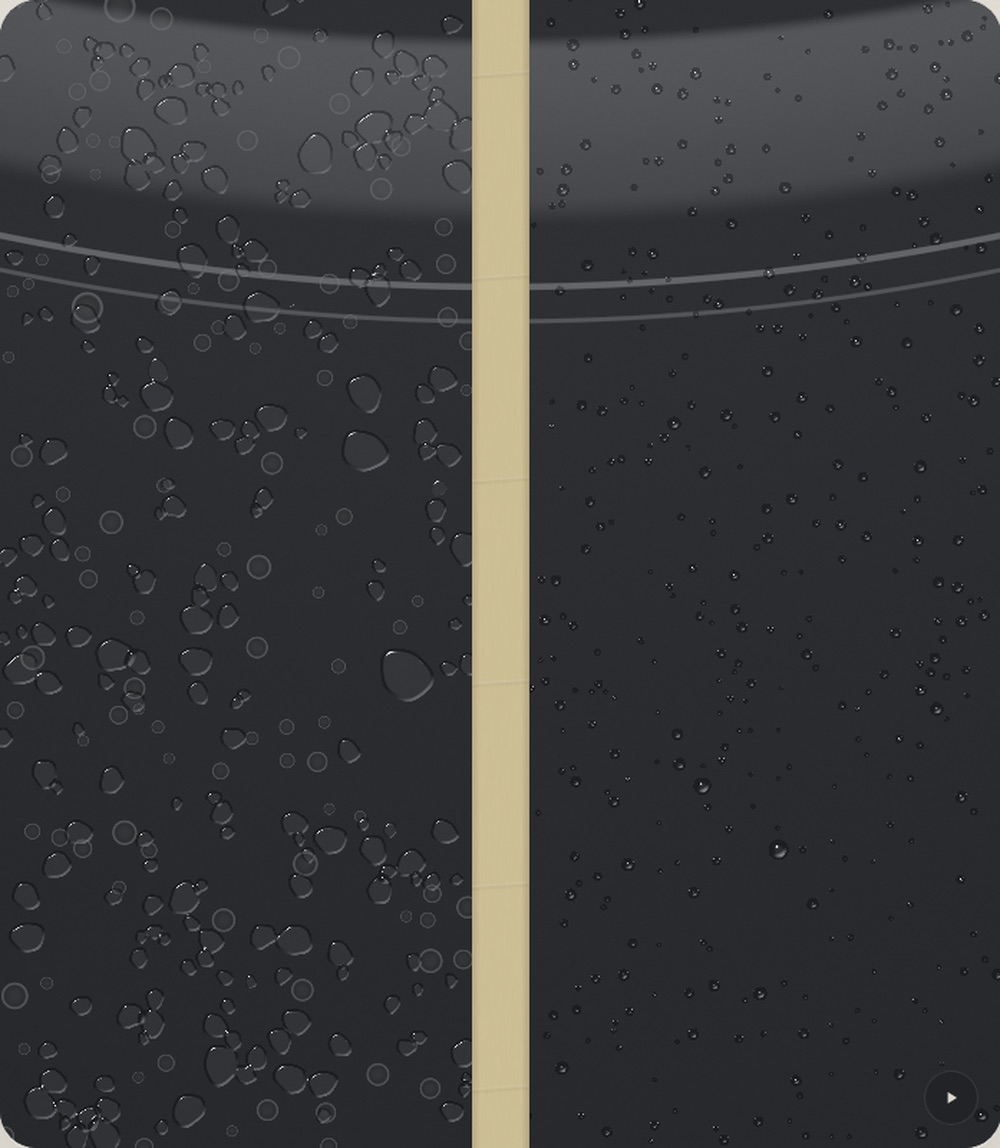
Simulation: sprinkler water lands on a dark panel. On the uncoated half, water spreads into flat sheets that cling and leave mineral spots as they dry. On the coated half, it gathers into round beads that roll off.
What a coating does
- Makes water and road film slide off, so the car stays cleaner between washes.
- Keeps the gloss you paid to have corrected.
- Takes the first hit from sun, salt air, bird droppings and sap, so the clear coat doesn’t.
- Turns a weekly wash into a ten-minute rinse and dry.
What it doesn’t
- Stop rock chips. That’s paint protection film, a different job.
- Make the car scratch-proof. A dirty towel will still put swirls in it.
- Fix the paint underneath. Whatever’s there when we coat is sealed in, which is why we correct first.
- Make it spot-proof. A bead left to dry in the sun still leaves a mark. There are just far fewer of them.
The price list.
Every price includes products and labour. The quote after your inspection can go down, but never up.
Paint protection film (PPF) is quoted after inspection, from about $1,900 for a front end.
Three days in the bay.
A two-step correction with a coating, start to finish. Shorter jobs skip days; none of them skip the inspection.
-
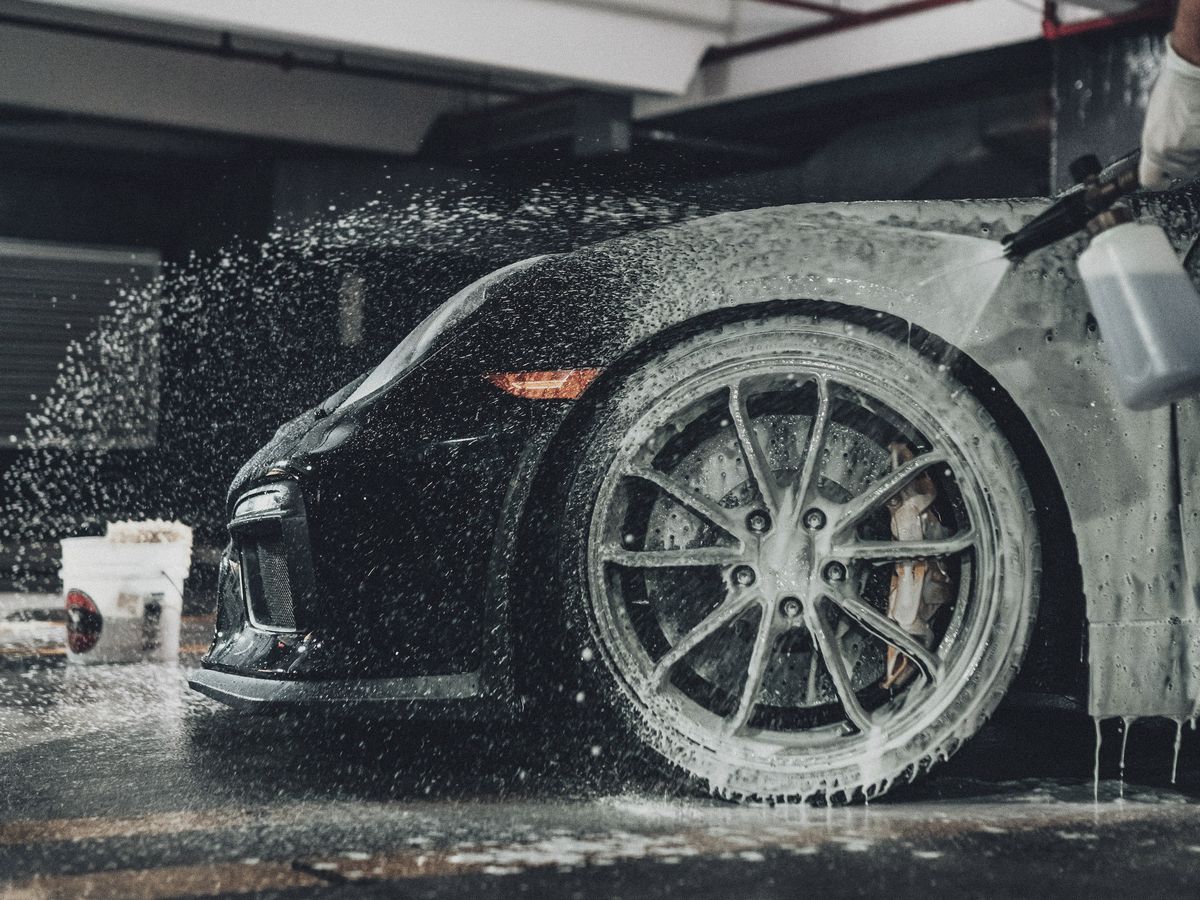
Day 1
Inspect, wash, decontaminate.
- Walk the car with you under the light. Photos and a paint reading on every panel.
- Snow foam, then a two-bucket hand wash. Nothing touches the paint dry.
- Iron remover, which turns purple where it dissolves embedded brake dust. Then clay, tar remover, and tape on every rubber seal and badge edge.
-
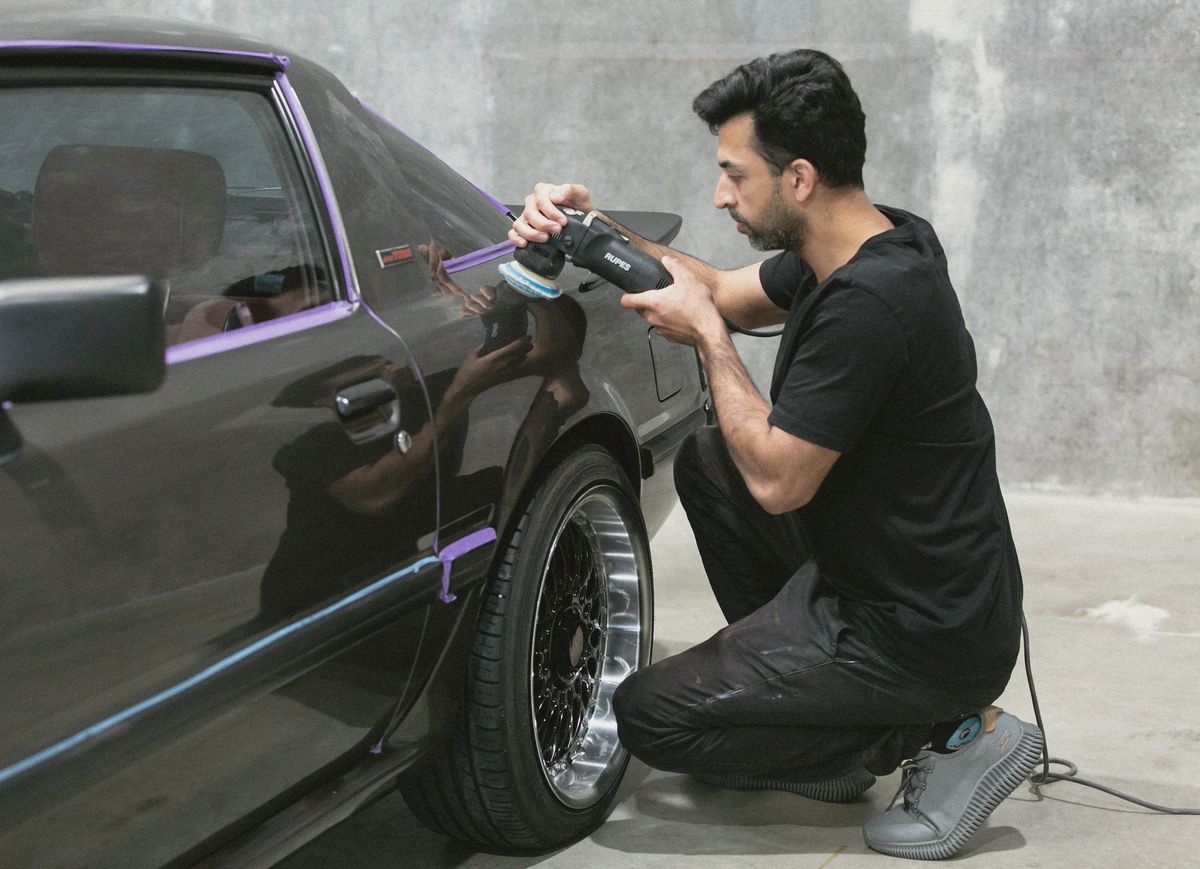
Day 2
Test spot, then correct.
- A test spot on each kind of panel, starting with the gentlest pad and polish and stepping up only if it’s needed.
- Compound, then polish, one section at a time. Readings after every step.
- An alcohol wipe between steps strips the oils, so we see the real finish, not a filled one.
The ladder, gentlest first
- Finishing foam + fine polish~0.5 µm
- Polishing foam + medium polish~1 µmMost hoods stop here
- Microfibre + compound~2 µm
- Wool + heavy compound3 µm+
-
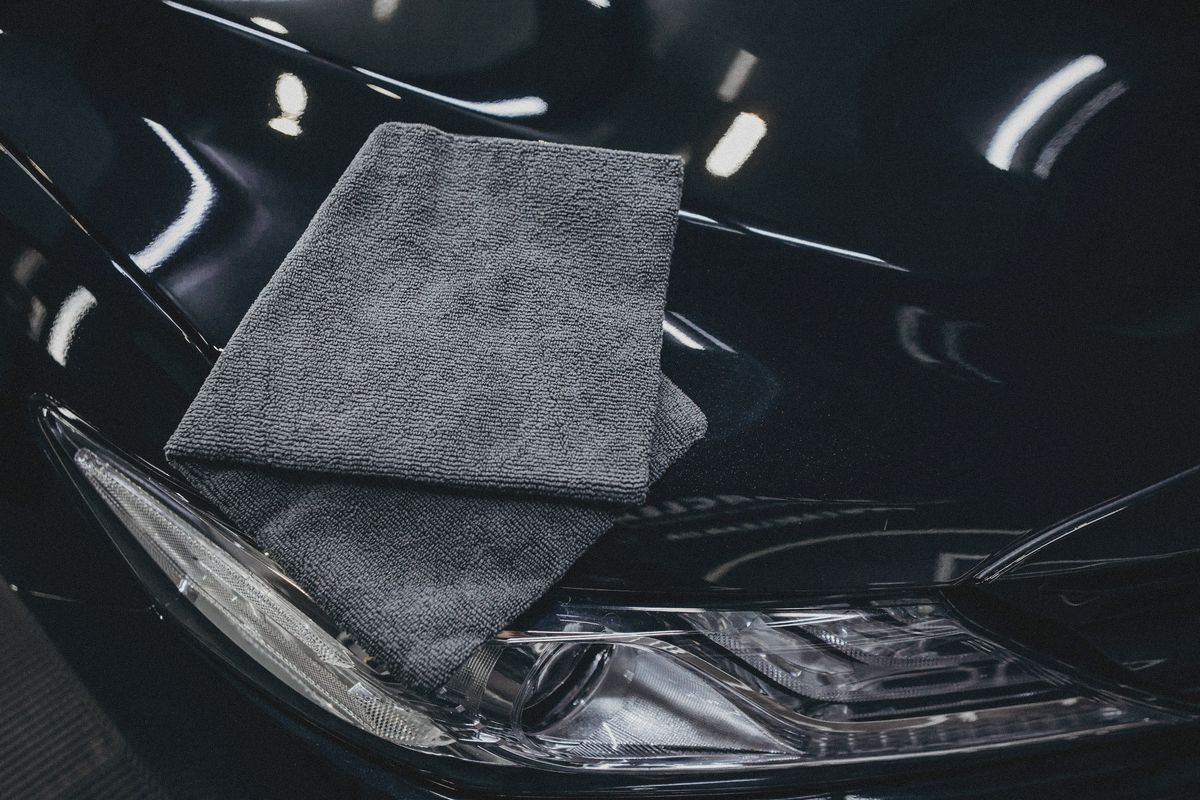
Day 3
Coat, cure, hand back.
- Coating applied panel by panel, levelled within its flash time, then cured under infrared lamps.
- Twelve hours indoors before it sees water.
- Final check under three lights: LED, a warm sun-gun, and daylight at the door.
- Hand-back with the readings, the photos and the light.
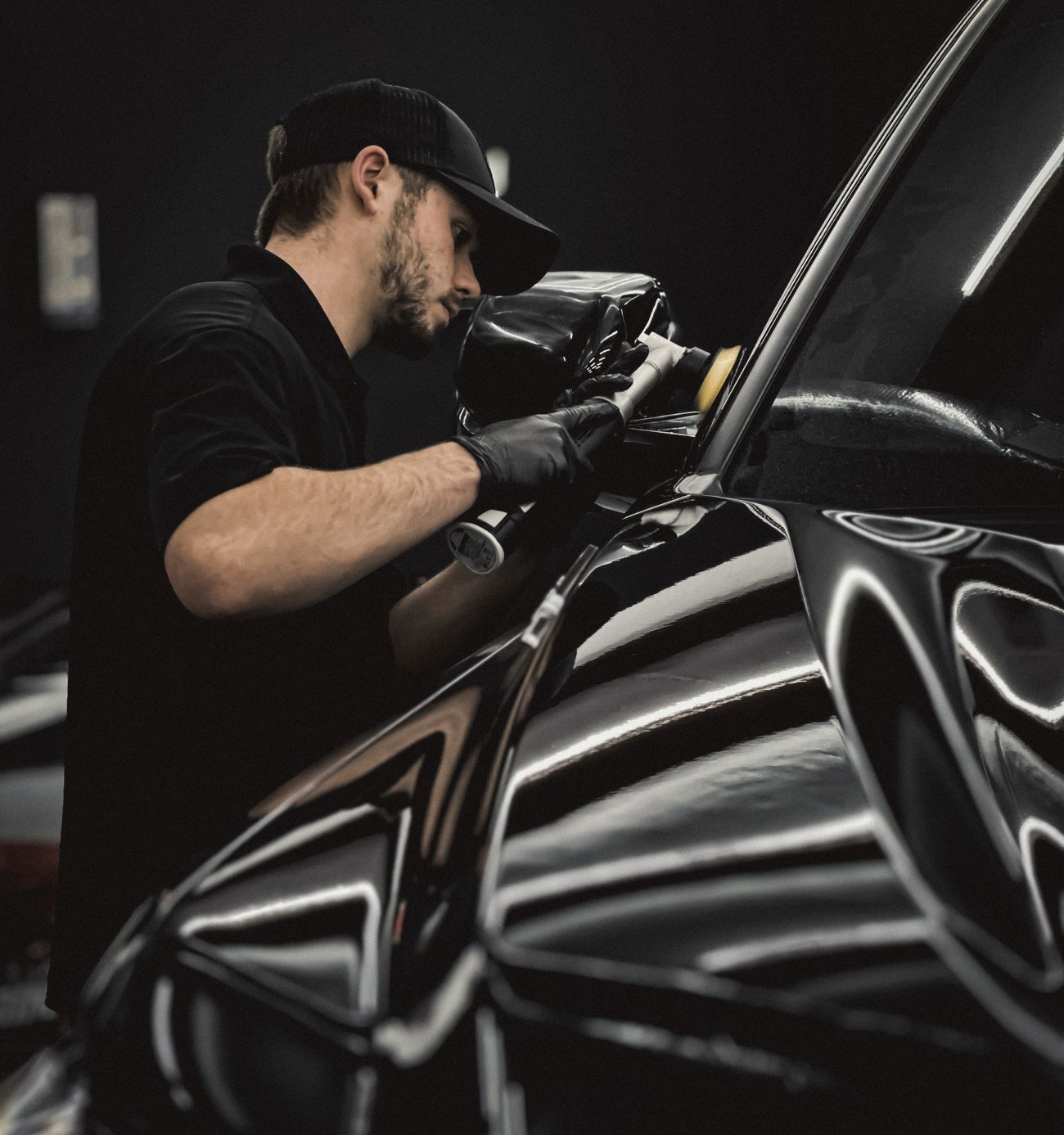
We hand you the light.
Pick-up isn’t keys across a counter. We dim the bay, give you the torch and walk the car with you, panel by panel, with the readings in hand. If you find something we missed, it goes back in the bay that afternoon.
- The condition reportEvery panel’s reading at arrival and at hand-back.
- Before and after photosTaken under the same light, from the same spot.
- A care sheet and a wash kitTwo buckets, the right soap, two clean towels.
- A check-in at two weeksA quick look under the light, free.
What clients say
They told me at drop-off which scratch wouldn’t come out. It didn’t. Everything else did.
I got a printout with numbers for every panel. My accountant would love these people.
I went round the car twice with their flashlight looking for a swirl. Gave up.
Questions people ask at the bay door.
Can you get this scratch out?
Run a fingernail across it. If the nail doesn’t catch, it’s almost certainly in the clear coat and polishing will remove it or make it very hard to find. If the nail catches, it’s through the clear and into the colour. That needs touch-up paint or a body shop, and we’ll tell you so rather than thin your clear chasing it.
Will polishing damage my paint?
Polishing removes a little clear coat, which is the whole point. Done blind, it can remove too much. That’s why we measure first, use the gentlest method that works, and stop well short of the limits. A typical correction here takes off 2–3 microns, a few percent of the clear.
How long does a ceramic coating really last?
As long as it’s washed properly. The two-year and five-year ratings assume a pH-neutral soap, clean towels and no automatic car washes. On the Keeper Plan we check it at every visit and top it up yearly, which is the honest way to get to five years.
Can I still use an automatic car wash?
You can, the same way you can put a cast-iron pan in the dishwasher. The brushes will put swirls back into the paint within a few visits. A touchless wash is fine in a pinch.
Do you come to me?
Keeper Washes are mobile anywhere from Del Mar to Downtown and out to Poway. We bring a water-reclaim mat, so nothing goes down the storm drain. Everything else happens in the bay, because correction needs controlled light and temperature, and coatings need a dry room to cure.
What does the free inspection involve?
Twenty minutes in the bay with the lights down. We take readings on a few panels, show you what the light shows us, and quote from that, not from a photo. No obligation, and no upsell list.
Book an inspection.
Twenty minutes, free, under the light. We’ll show you what we see and quote from that.
- Studio
- Miramar, San Diego. Five minutes off the 15 at Miramar Road. The address comes with your booking.
- Hours
- Tuesday to Saturday, 8 to 5. Drop-offs from 7:30.
- Phone
- (858) 555-0147
- hello@rakinglight.co